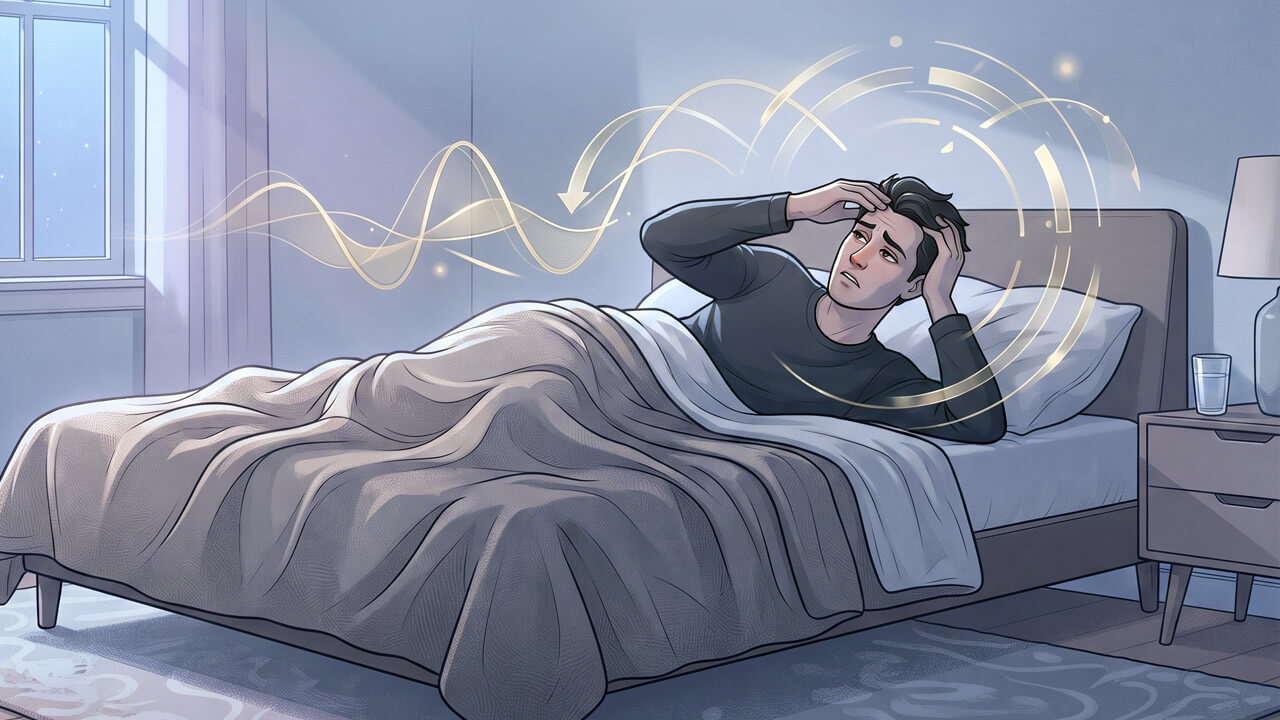
Frequent Night Awakenings: Why You Wake Up and How to Settle Back
Discover the common physiological triggers of middle-of-the-night awakenings and learn practical steps to return to sleep smoothly.
By Clinical Sleep Specialists
Waking up briefly 1 to 3 times per night is actually normal across natural 90-minute sleep cycles. In healthy individuals, these brief transitions (micro-arousals) last only a few seconds, and you fall back asleep without remembering them.
However, if you find yourself fully awake multiple times a night, tossing and turning for 20 minutes or longer, or feeling frustrated, these awakenings significantly fragment your sleep architecture and decrease overall daytime energy.
Common Causes of Frequent Night Awakenings
1. Environmental Disturbances
- Noise Spikes: Intermittent sounds (traffic, air conditioning cycling, neighbors, pets, or bed partners snoring) pull the brain from deep sleep into lighter stages or full wakefulness.
- Temperature Fluctuations: Bedrooms that become too hot or too cold in the early morning hours cause autonomic arousal and restlessness.
- Light Intrusion: Morning sunlight creeping through curtains or LED indicators from electronics suppress melatonin prematurely.
2. Physical Discomfort & Pain
- Unsupportive pillows or an old mattress can cause neck stiffness, lumbar tension, or pressure point pain that forces you to change positions repeatedly.
- Dry mouth or nasal congestion forces mouth breathing, which dries throat tissues and triggers awakenings.
3. Nocturia (Frequent Urination)
Waking up to use the bathroom more than once or twice a night may be caused by late-evening fluid intake, diuretic medications, high sodium dinners, or underlying medical conditions such as sleep apnea (where negative chest pressure stimulates the heart to release atrial natriuretic peptide, triggering urine production).
4. Sleep Maintenance Insomnia & Clock-Watching
Waking up and immediately checking the time triggers an adrenaline response: "It's already 3:30 AM, I only have 3 hours left to sleep!" This performance anxiety stimulates the sympathetic nervous system and prevents the brain from shifting back into slow-wave relaxation.
What to Do When You Wake Up in the Middle of the Night
1. Resist Checking the Clock or Phone
Keep your phone face-down and out of arm's reach. Checking the time provides zero helpful information and only fuels anxiety. Avoid looking at digital displays when you wake up during the night.
2. Practice Diaphragmatic or 4-7-8 Breathing
Stay lying comfortably in bed. Inhale quietly through your nose, expand your belly, and exhale slowly through your mouth twice as long as the inhale. This stimulates the vagus nerve and lowers your heart rate.
3. Use the 20-Minute "Out-of-Bed" Reset
If you are still wide awake after approximately 20 minutes, do not stay in bed tossing and turning.
- Sit in a comfortable chair in dim, warm light.
- Read a book or listen to calming ambient audio until you feel genuine eyelid heaviness.
- Return to bed only when sleepy.
Preventative Bedroom Habits
- Hydration Timing: Drink plenty of water throughout the day, but taper fluids 1 to 2 hours before bed.
- Optimal Thermostat: Set your bedroom between 18°C and 20°C (65°F–68°F).
- Dark & Quiet: Use blackout curtains, a supportive contour pillow, and earplugs or a sound machine if living in a noisy area.
When to Consult a Doctor
If frequent night awakenings are accompanied by gasping, choking, severe morning dry mouth, chest discomfort, or excessive daytime sleepiness, schedule an evaluation with a healthcare professional to check for conditions such as sleep apnea or restless legs syndrome.
Disclaimer
The information provided in this app is not intended to be a substitute for professional medical advice, diagnosis, or treatment. Always seek the advice of your physician or other qualified health provider with any questions you may have regarding a medical condition.