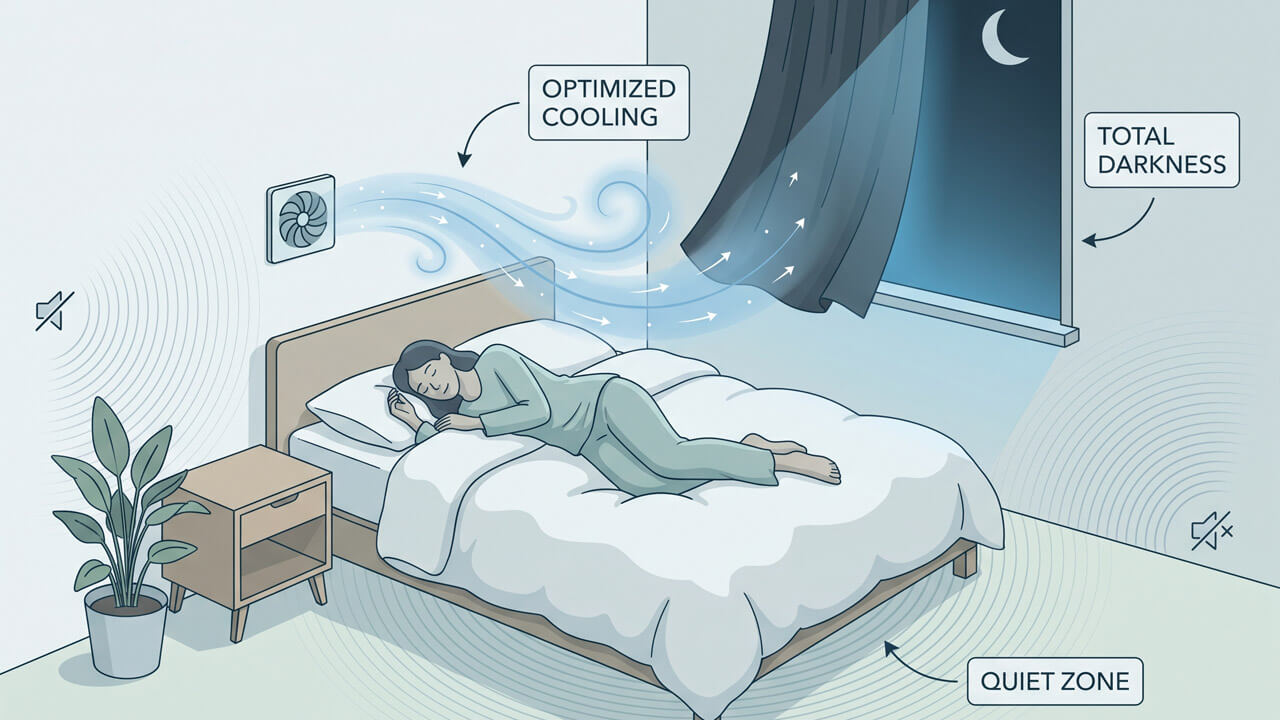
Designing the Optimal Sleep Sanctuary: Noise, Light, and Temperature
How environmental factors directly affect sleep quality, micro-arousals, and heart rate during the night.
By Environmental Sleep Ergonomics
Even when you are asleep, your sensory organs remain partially active. Your ears continuously process sounds, your eyes perceive subtle light penetrating through eyelids, and your skin monitors ambient temperature.
Subtle environmental stressors trigger micro-arousals—brief brain-state shifts that kick you out of deep slow-wave sleep into light sleep without your conscious memory.
1. Temperature: The Thermoregulatory Sweet Spot
The Science
To initiate and maintain deep sleep, the human body must shed approximately 1°C (2°F) of core heat. If the room is too warm, your body cannot effectively offload this heat, leading to restlessness, elevated resting heart rate, and fragmented REM sleep.
Optimal Settings
- Target Room Temperature: 18°C to 20°C (65°F to 68°F) is recommended by sleep physiologists.
- Breathable Bedding: Opt for natural fibers (cotton, linen, bamboo, or wool) that wick moisture and allow passive heat dissipation, avoiding synthetic polyesters that trap warmth.
- Cold Extremities? Wearing light socks can actually accelerate sleep onset by dilating blood vessels in your feet, drawing heat away from your core.
2. Noise: Managing Decibels and Micro-Arousals
The Science
The auditory cortex continues to monitor environmental sounds for threats throughout the night.
- Sound levels above 40–45 dB (roughly the sound of a quiet conversation or traffic hum) significantly increase the likelihood of sleep disruption.
- It is not just constant noise that wakes you, but sudden spikes in sound volume (such as honking, barking, doors closing, or a partner's sudden loud snore).
Noise Control Actions
- Audio Masking: Use a consistent white noise or pink noise machine to raise the ambient sound floor, smoothing out sudden acoustic spikes.
- Earplugs: High-grade silicone or soft foam earplugs can attenuate noise by 25–32 dB.
- Acoustic Absorption: Thick rugs, heavy blackout curtains, and upholstered furniture absorb room reverberations and dampen incoming exterior sound.
3. Light: Maintaining Total Darkness
The Science
Specialized ganglion cells in the retina contain the photopigment melanopsin, which is exquisitely sensitive to short-wavelength blue light. Even tiny amounts of light (from digital clocks, charging LEDs, or streetlights filtering through blinds) suppress natural melatonin release and disrupt circadian stability.
Light Control Actions
- Blackout Shades or Curtains: Eliminate outdoor light pollution.
- Sleep Mask: A contoured, breathable 3D eye mask is an inexpensive and highly effective tool for complete blackout conditions.
- Dim All Bedroom LEDs: Cover intrusive charger lights or appliance displays with light-dimming stickers.
Bedroom Optimization Checklist
- [ ] Thermostat set to 18°C–20°C (65°F–68°F).
- [ ] Room is completely dark (cannot see your hand 1 foot in front of you).
- [ ] Ambient noise floor is steady and below 40 dB.
- [ ] Bedding uses breathable, temperature-regulating natural fabrics.
Disclaimer
The information provided in this app is not intended to be a substitute for professional medical advice, diagnosis, or treatment. Always seek the advice of your physician or other qualified health provider with any questions you may have regarding a medical condition.