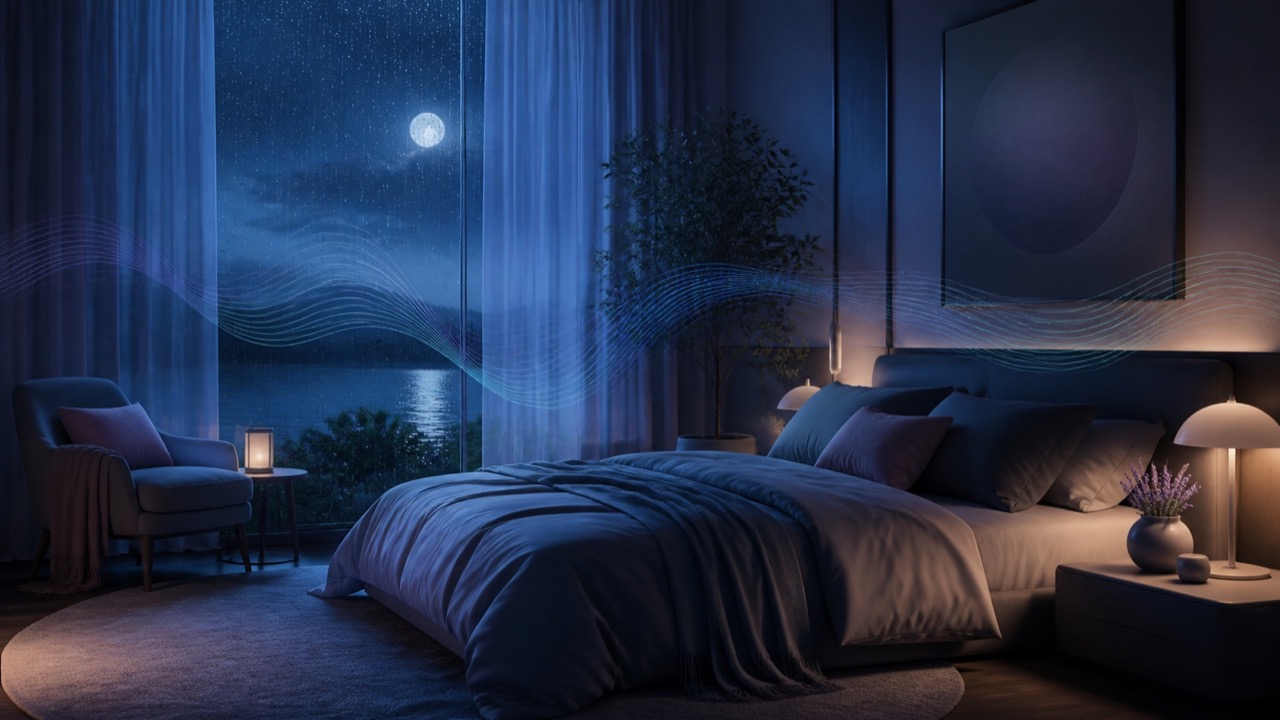
Sound Therapy for Sleep: White Noise, Pink Noise, and Sound Masking
Explore how auditory masking colors work, which sound spectrum best enhances deep sleep, and how to safely use soundscapes.
By Acoustic Sleep Science
If you live in a bustling urban environment, have noisy neighbors, or share a bed with someone who snores, total silence may be nearly impossible to achieve. In these environments, sound masking provides a proven scientific solution.
Rather than attempting to eliminate sound, audio masking introduces a constant, soothing auditory background that blunts sudden acoustic fluctuations.
The Colors of Noise: What's the Difference?
1. White Noise (Equal Power Across All Frequencies)
White noise contains all audible frequencies (from 20 Hz to 20,000 Hz) played at equal energy levels, resembling static from an untuned television or a loud mechanical fan.
- Best For: Masking high-frequency, jarring sounds such as car horns, barking dogs, or doors slamming.
- Downside: Some people find higher frequencies slightly harsh over extended periods.
2. Pink Noise (Deeper, Natural Balance)
Pink noise has deeper, richer lower frequencies and softer high frequencies (energy drops by 3 dB per octave as frequency increases). It sounds remarkably like steady rainfall, wind rustling through trees, or ocean waves.
- What the evidence suggests: Some small studies report changes in slow-wave activity or memory, but evidence is mixed and pink noise is not a proven way to enhance deep sleep.
- Best For: Trying a steady, comfortable background sound to mask unpredictable noise.
3. Brown (Brownian) Noise (Deep, Low-Rumble Bass)
Brown noise decreases in power even more steeply at higher frequencies (6 dB per octave drop). It has a warm, deep rumble, similar to distant heavy thunder, an airplane cabin hum, or a powerful waterfall.
- Best For: Soothing overactive minds, blocking loud bass/traffic rumble, and calming racing thoughts.
How Sound Masking Protects Sleep Architecture
Sound masking may make sudden environmental noises less noticeable for some people, but individual responses vary and louder is not better.
Use the lowest volume that is comfortable and avoid treating specific decibel differences as a guarantee against awakenings.
Safe Practices for Nighttime Audio Use
1. Keep Volume at a Safe Level
The National Institute for Occupational Safety and Health (NIOSH) and the World Health Organization recommend keeping continuous ambient nighttime sound below 50–60 dB. If you must raise your voice to speak over the sound machine, it is too loud.
2. Maintain Distance
Place the speaker or sound machine at least 1.5 to 2 meters (5 to 6 feet) away from your head, rather than directly on your pillow or nightstand.
3. Choose Continuous Over Looping Tracks
Ensure your app or machine plays seamless, non-looping audio. Subtle audio loop transitions or sudden pauses can cause micro-awakenings.
Summary Key Takeaways
- Sound Masking May Help: It can make unpredictable background sounds less noticeable for some sleepers.
- Pick Your Sound: Choose the sound you find comfortable; no color of noise is proven best for everyone.
- Keep it Under 60 dB: Place devices a few feet away at moderate volumes.
Disclaimer
The information provided in this app is not intended to be a substitute for professional medical advice, diagnosis, or treatment. Always seek the advice of your physician or other qualified health provider with any questions you may have regarding a medical condition.