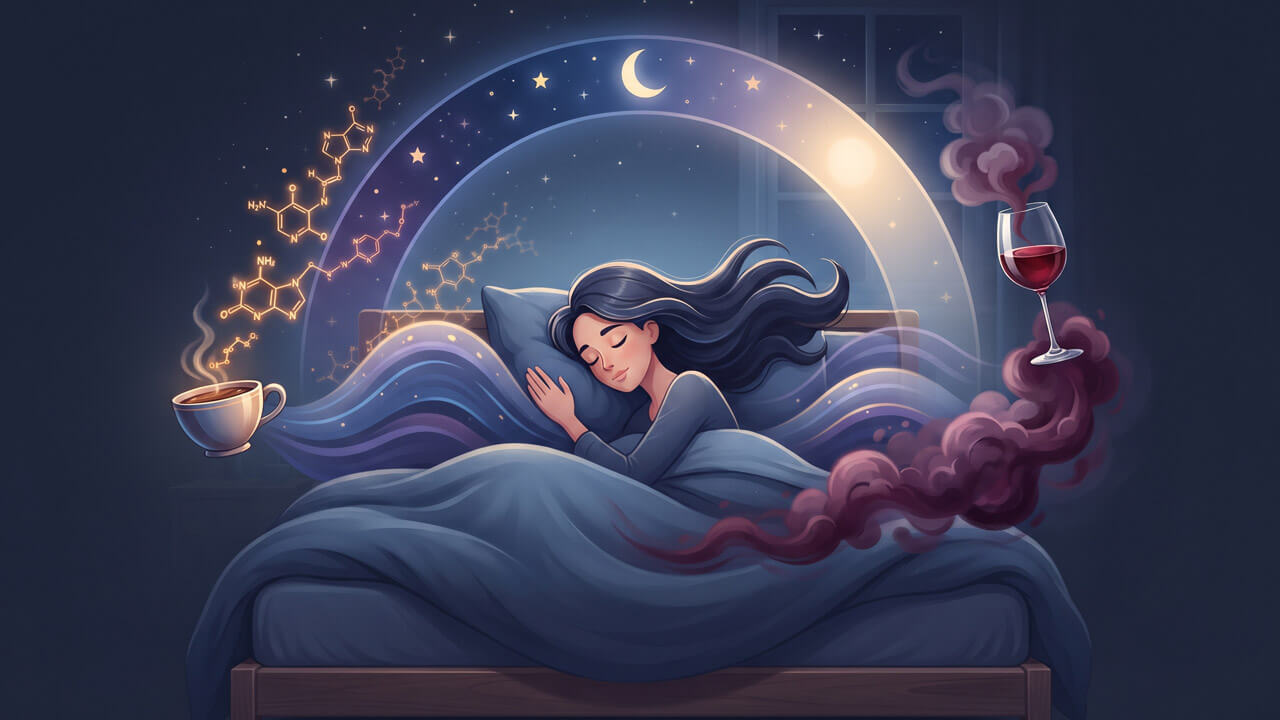
Caffeine and Alcohol: How Evening Habits Affect Sleep
Learn the biological mechanisms of how afternoon caffeine, evening alcohol, and late meals alter sleep architecture and prolong latency.
By Nutritional Sleep Science
What you consume throughout the afternoon and evening plays a profound role in how quickly you fall asleep, how deeply you sleep, and whether you wake up feeling rejuvenated.
Among everyday substances, caffeine and alcohol are the two most prevalent disruptors of healthy sleep architecture.
1. The Caffeine Paradox: Adenosine Blockade
How Caffeine Works
Throughout your waking hours, your brain produces adenosine, a neurochemical byproduct of cellular metabolism. As adenosine accumulates in the brain, it binds to adenosine receptors (A1 and A2A), building up what sleep scientists call sleep pressure (the biological drive to sleep).
Caffeine is molecularly similar to adenosine. When ingested, it crosses the blood-brain barrier and docks into adenosine receptors, physically blocking adenosine from binding. You do not stop producing adenosine; you simply become blind to the sleepiness signals.
Half-Life and Quarter-Life
- Half-Life: Caffeine has an average metabolic half-life of 5 to 7 hours. If you consume 200 mg of caffeine at 3:00 PM, roughly 100 mg remains active in your bloodstream at 9:00 PM.
- Quarter-Life: Caffeine's quarter-life is approximately 10 to 12 hours. Even if you fall asleep, residual caffeine diminishes slow-wave deep sleep and elevates resting heart rate throughout the night.
Practical Caffeine Rule
- Establish a caffeine cutoff time at least 8 to 10 hours before your planned bedtime (typically around 12:00 PM – 2:00 PM for most individuals).
2. The Alcohol Illusion: Sedation vs. Sleep
Many people use a "nightcap" to unwind, believing alcohol helps them sleep. While alcohol is a central nervous system sedative that accelerates initial sleep onset, its downstream effects are remarkably damaging.
Why Alcohol Ruins Sleep Quality
1. Suppression of REM Sleep: Alcohol drastically suppresses rapid eye movement (REM) sleep, which is critical for emotional processing, memory consolidation, and mental resilience.
2. Rebound Arousals: As your liver metabolizes alcohol during the second half of the night, blood alcohol concentration drops to zero. This triggers an autonomic rebound effect with elevated heart rate, adrenaline release, and frequent micro-awakenings.
3. Worsened Snoring and Airway Collapse: Alcohol relaxes the pharyngeal muscles in your throat, increasing upper airway resistance. This often turns mild breathers into loud snorers and significantly aggravates sleep apnea episodes.
Practical Alcohol Guidelines
- Limit alcohol intake and aim to finish your last drink at least 3 to 4 hours before bedtime.
- Alternate alcoholic beverages with water to prevent dehydration.
3. Late-Night Meals and Digestion
Eating a heavy, spicy, or high-fat meal close to bedtime forces your gastrointestinal tract to work when it is biologically primed to slow down.
- Digestion elevates core body temperature, conflicting with the natural temperature drop required for deep sleep.
- Lying flat after a heavy meal increases the likelihood of acid reflux (GERD), leading to micro-awakenings, chest discomfort, and nocturnal coughing.
Quick Reference Summary
- Caffeine Cutoff: Stop caffeine 8–10 hours before bed (by 12:00–2:00 PM).
- Alcohol Timing: Finish alcoholic beverages 3–4 hours before sleep; avoid using alcohol as a sleep aid.
- Dinner Window: Finish heavy meals at least 2–3 hours before lying down.
Disclaimer
The information provided in this app is not intended to be a substitute for professional medical advice, diagnosis, or treatment. Always seek the advice of your physician or other qualified health provider with any questions you may have regarding a medical condition.